Past, Present, and Future of Fluid Mechanics
Abstract: Experiments have always played a part in fluid mechanics research, from a child dropping a leaf in a river as they watch it drift downstream, to highly sophisticated detailed 3D measurements of turbulent fluid velocity over and through a complicated geometry. Prof. Ted Heindel will discuss some of the experimental fluid mechanics research that has appeared in JFE and associated ASME journals over the past 100 years. From the advent of high-speed flow visualization and the foundational experiments of Knapp and Moody to the current use of cell phones and “big data” processing, he will highlight some of the papers that have appeared. He will emphasize the ingenuity of the experimentalist as they strive to measure fluid flow quantities to understand fluid flow phenomena. He will also provide his take on the direction of experimental fluid mechanics for the next 100 years.
Over the same century, computational fluid dynamics (CFD) has evolved from a theoretical curiosity into a central analytical tool in mechanical engineering. Early numerical approaches emerged with Lewis Fry Richardson’s finite-difference ideas in the 1920s and were advanced by von Neumann and Richtmyer in the 1940s through foundational stability analyses. The advent of digital computing in the 1950s–1960s enabled practical simulations, followed by the development of early software in the 1970s and general-purpose solvers in the 1980s that could handle increasingly complex turbulent and transonic flows. During this time, ASME’s Fluids Engineering Division (FED) helped shape the environment that enabled CFD to flourish. Since its founding in 1926, FED has provided a professional infrastructure supporting innovation in fluid mechanics and numerical methods. The creation of the Coordinating Group on CFD in 1988, later formalized as the CFD Technical Committee, further strengthened this role as CFD became a core tool across aerospace, automotive, and energy applications. Looking ahead, advances in high-performance computing, data science, and artificial intelligence are expected to drive the next generation of CFD capabilities, enabling higher-fidelity simulations, faster design cycles, and real-time predictions. Prof. Charlie Zheng will offer perspectives on the past, present, and future of CFD.
Fluids engineering education has evolved over the past century, transitioning from primarily theory- and experiment-based instruction to an integrated approach that incorporates computation, data analysis, and hands-on experience. Early curricula emphasized fundamental principles and laboratory demonstrations, while modern programs increasingly blend experimental methods, CFD, and interdisciplinary applications. Looking forward, fluids engineering education is expected to further embrace digital tools, virtual laboratories, and data-driven learning, preparing students to tackle complex, real-world problems in a rapidly changing technological landscape.
Professor Francine Battaglia will lead discussions on educational perspectives covering the past, present, and future of fluid mechanics.
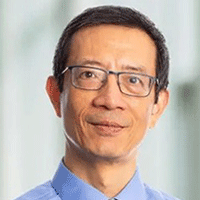
Panelists:
Zhongquan Charlie Zheng
Professor and Department Head
Mechanical and Aerospace Engineering Department
Utah State University
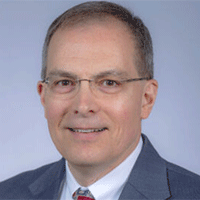
Theodore (Ted) Heindel
Bergles Professor of Thermal Science and University Professor
Mechanical Engineering, Chemical and Biological Engineering (Courtesy)
Director, Center for Multiphase Flow Research and Education (CoMFRE)
Iowa State University
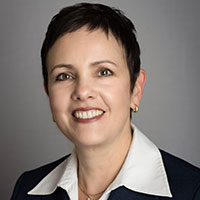
Francine Battaglia
Professor & Chair
Department of Mechanical and Aerospace Engineering
University of Buffalo
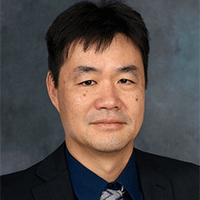
Moderator: Ning (Michael) Zhang, Ph.D.
Fellow of ASME
Chair ASME Fluids Engineering Division
Dept. Head Engineering & Computer Sciences
Professor of Mechanical Engineering
McNeese State University
Fluids Engineering and CMFD Innovations for the Oil and Gas Industry
By MFTC of Fluids Engineering Division
Over the past two decades, fluid engineering has undergone a transformative evolution in the oil and gas industry. Computational Multiphase Fluid Dynamics (CMFD) has emerged as a cornerstone technology, enabling engineers to simulate, optimize, and innovate across a wide spectrum of applications. From drilling operations and reservoir management to pipeline transport and refining processes, CMFD has empowered engineers to tackle complex challenges with precision and efficiency.
This panel will seek to explore areas such as:
- Drilling Operations
- Reservoir Engineering
- Pipeline Transportation
- Process and Refining
- Offshore and Deepwater Operations
- Showcase recent advancements in fluid engineering and CMFD applications
- Share insights into emerging technologies and future directions
Panelists:
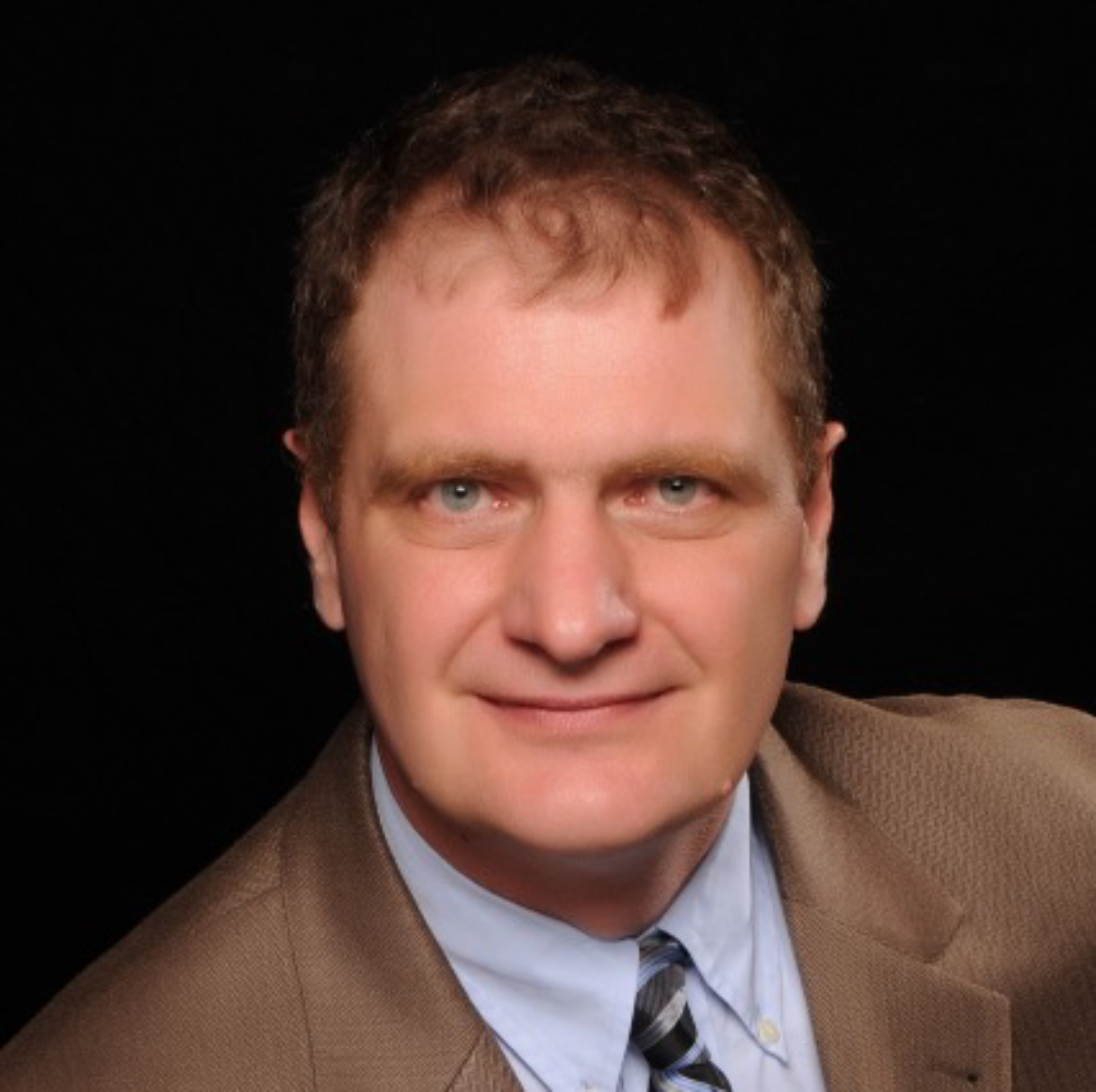
Dr. Gocha Chochua
Technical Advisor
SLB (formerly Schlumberger
Bio: Dr. Gocha Chochua is a Technical Advisor at SLB with extensive expertise in analytical and computational fluid dynamics (CFD), heat and mass transfer, turbomachinery design and analysis, and erosion modeling and mitigation. He holds a Ph.D. in Aerospace Engineering from the University of Florida and brings broad industry experience across oil and gas, turbomachinery, and aerospace. Dr. Chochua has authored more than 40 scientific publications and holds a comparable number of patents, underscoring his significant contributions to engineering and technology innovation. He also serves as a Program Coordinator for the Society of Petroleum Engineers (SPE) Gulf Coast Section.
Dr. Kuochen Tsai
Staff Engineer
Shell
Bio: Kuochen holds a PhD in mechanical engineering from SUNY Stony Brook and has been working in fluid mechanics and flow modeling for the past 30 years. He is currently Shell’s corporate expert on multiphase and complex flows. His Experience spans from upstream to downstream, including combustion heating and flow assurance for oil and gas production, proppant transport for hydraulic fracturing, flow assisted corrosion and erosion, fluidized bed reactor modeling for biofuel production and CO2 absorption, and chemical reactor design and optimization. He pioneered applications using probability density function for LDPE reactors, MP-PIC modeling of proppant transport, fluidized bed reactor design and scale-up, and machine learning approaches for corrosion and water/oil separation in pipe flows. Kuochen has more than 50 publications and patents and is a senior member of both AIChE and SPE. He also served as chairman and director for Chinese American Petroleum Association in Houston. In his spare time, Kuochen enjoys table tennis, cycling and traveling around the world.
Prof. Siamack Shirazi
ASME Fellow, Director, Erosion/Corrosion Research Center
University of Tulsa
Bio: Siamack A. Shirazi is a Professor of Mechanical Engineering and Director of the Erosion/Corrosion Research Center (E/CRC) at The University of Tulsa (TU). He is also the Director and Co‑Founder of the TU Sand Management Projects (TUSMP). Over 36 years at TU, he has produced more than 770 professional outputs, including peer‑reviewed papers, conference publications, and invited presentations. His teaching and research have advanced erosion mitigation technologies for the oil and gas, mining, and renewable energy industries.
Professor Shirazi is internationally recognized for his leadership in erosion prediction and sand management. He and his team at E/CRC developed widely used models for erosion rate prediction and threshold velocity estimation. These models form the basis of the SPPS (Sand Production Pipe Saver) software—also known as the “Tulsa Model”—a tool extensively used by engineers for facility design, redesign, and equipment sizing. Under his direction, E/CRC has grown into TU’s largest Joint Industry Project, supported by 17 major operators and service companies.
His honors include the NACE Technical Achievement Award, ASME and NACE Fellow distinctions, the ASME FED Moody Best Paper Award, the SPE International Projects, Facilities, and Construction Award, the ASME Petroleum Fluids Engineering Award, TU’s Best Researcher Award, and the SPE International Distinguished Member Award. He is currently TU’s most cited active scientist.

Muhammad Sami
Senior Architect of Applications Engineering
Synopsys Inc.
Bio: Dr. Muhammad Sami is a Senior Architect of Applications Engineering at Synopsys Inc., specializing in Computational Fluid Dynamics (CFD) to optimize complex upstream and downstream engineering systems. Based in Houston, he has over 30 years of experience across several industries such as auto/aero, biomedical, environmental and energy. He is actively involved in sustainability studies around new energy and carbon capture. Dr. Sami bridges traditional computational physics with modern digital workflows to accelerate asset integrity optimization. He earned his Bachelor’s degree in Mechanical Engineering from NED University of Engineering & Technology in Karachi, Pakistan, and his PhD in Mechanical Engineering from Texas A&M University before beginning his corporate industry career at Fluent Inc. in December 2000.
Organizers:
Dr. Yong Chang, SLB, Houston, TX, yongchangxyz@gmail.com
Dr. Jian Liu, Pacific Northwest National Laboratory, Richland, WA, jian.liu@pnnl.gov