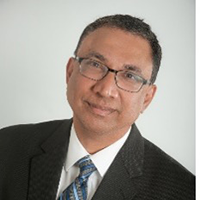
Dr. Ganesh Raman
Assistant Vice Chancellor for Research
California State University
Dr. Ganesh Raman is Assistant Vice Chancellor for Research at the California State University (CSU) Office of the Chancellor. He is the senior academic official responsible for the enterprise-wide vision, advancement and administration of CSU’s research and scholarly mission. He oversees 10 systemwide research consortia and numerous multi-campus institutes and centers.
In his nine years at CSU, Dr. Raman has guided the growth and evolution of its research enterprise that includes 22 campuses by $423M to over $981M in annual sponsored program expenditures. He has fostered a significant expansion of research activities, as reflected in the increase of CSU archival publications by 43% to 43000 papers during his term and the growth of CSU campuses with Carnegie classifications from one R2 in 2017 to one R1 and eight R2 campuses in 2025. Dr. Raman created the first-ever systemwide CSU Strategic Plan for Research, Scholarship and Creative Activities, which connects research directly to student success, faculty excellence, and serving California communities. He also launched a systemwide CSU STEM network and a CSU systemwide Climate Adaptation Consortium that connects all 22 campuses in education and research.
Dr. Raman serves on the Board of Directors for the California Council on Science and Technology, California Life Sciences, and the Long Beach Accelerator. Dr. Raman formerly served as Deputy Vice Provost for Research at the Illinois Institute of Technology, where he was also a Professor in the Mechanical, Materials, and Aerospace Engineering Department.
Dr. Raman began his career at NASA Glenn Research Center. He is internationally recognized for his research in aeroacoustics and flow control and has published over 150 articles in leading scientific journals and conference publications. He is a fellow of the American Institute of Aeronautics and Astronautics, the American Society of Mechanical Engineers, and the Royal Aeronautical Society, UK; and is the founding editor-in-chief of the International Journal of Aeroacoustics. He earned his Ph.D. in Mechanical and Aerospace Engineering from Case Western Reserve University.
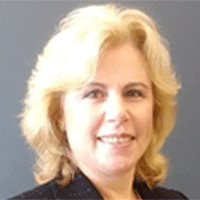
Alexandrina Untaroiu
Associate Professor
Virginia Tech
Keynote Title: Applications of CFD for Enhanced Stability Margins in Rotating Machinery
Biography: Alexandrina Untaroiu received her Bachelor of Mechanical Engineering degree from the Politehnica University of Bucharest, Romania, followed by M.S. and Ph.D. degrees in Mechanical and Aerospace Engineering from the University of Virginia in 2004 and 2006, respectively. Her research expertise spans computational fluid dynamics and fluid–structure interaction. She is currently an Associate Professor in the Department of Mechanical Engineering at Virginia Tech. Dr. Untaroiu is an elected member of the ASME Division of Fluids Engineering Honors and Awards Committee and serves as an Associate Editor for the ASME Journal of Fluids Engineering. She has authored or co-authored more than 100 refereed journal articles and conference proceedings.
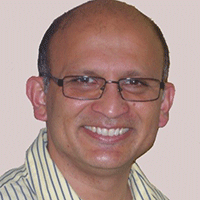
Dr. Ashvin Hosangadi
Vice-President and Principal Scientist
Combustion Research and Flow Technology Inc. (CRAFT Tech)
2026 ASME Henry R. Worthington Medal Winner
Keynote Title: Effects of Phase Change on Performance of Turbomachinery Operating at Trans-Critical Conditions
Abstract: This presentation will explore the impact of thermodynamic effects from phase change, and resulting real-fluid property variations, on turbomachinery performance near the critical point of the fluid. A compressible, real-fluid numerical framework for trans-critical conditions, covering both supercritical and subcritical regimes, is discussed. Phase change models have been developed that permit both condensation and vaporization and provide a seamless formulation for supercritical inlet conditions that may enter the saturation dome locally. Applications presented include cavitation performance and instabilities in liquid hydrogen turbopumps, as well as supercritical CO2 compressors being developed for sCO2 Brayton cycles for power generation. For liquid hydrogen turbomachinery, evaporative cooling effects from cavitation improve efficiency and delay head breakdown as inlet pressure decreases. In contrast, supercritical CO2 compressors operating with inlet conditions near the critical point can show significant degradation in efficiency due to the dramatic variations in properties from phase change. Full-scale CFD simulations validated against experimental data are presented to help identify thermodynamic effects of phase change in different regimes relative to the critical point.
Biography: Dr. Hosangadi is a founding member of CRAFT Tech, a small business that specializes in high-fidelity CFD software development and simulations for propulsion applications and other innovative new technologies. Dr. Hosangadi is a key developer of the multi-element, unstructured code, CRUNCH CFD®. For the past 35 years he has been actively involved in the development of CFD models for complex flows, specializing in non-ideal fluids and multi-phase effects for gas-liquid as well as gas-solid flows. Much of his work has involved the development of cavitation models for cryogenic fluids, the prediction of cavitation instabilities, and the development of cavitation suppression techniques for cryogenic inducers. He is currently involved in the design of robust, high-efficiency supercritical CO2 compressors that operate very near the critical point of the fluid. Dr. Hosangadi has also worked extensively in providing design support for high-energy, industrial pump systems for varied problems including pump instabilities, acoustics and cavitation performance. He co-authored a chapter with Dr Paul Cooper on "CFD Analysis of Flow and Performance" for the Pump Handbook. He is a former chairman of the Propulsion Technical Committee of ASME and has also served as the associate editor of the Journal of Mechanical Design.
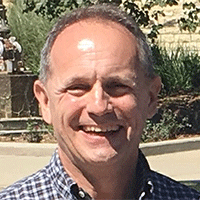
Paul Fischer
Professor, University of Illinois, Urbana Champaign
Senior Scientist, Argonne National Laboratory
Keynote Title: HPC and High-Order Methods for Thermal Hydraulics and MHD
Biography: Paul Fischer is a professor in Computer Science and in Mechanical Science and Engineering at the University of Illinois, Urbana Champaign, and is also a senior scientist at Argonne National Laboratory. He holds degrees in mechanical engineering from Cornell (BS), Stanford (MS), and MIT (PhD) and was the inaugural recipient of the Center for Research in Parallel Computation postdoctoral fellowship in applied mathematics at Caltech. Fischer pioneered the development of spectral element methods for high-performance simulations of turbulence, including the development of Nekton 2.0, the first commercial software for distributed-memory parallel computers. His research variant, Nek5000, is a Gordon Bell winner and has scaled to millions of MPI ranks. It is used by over 500 researchers in industry and academia and is part of the NRC's licensing software suite, BlueCRAB. Fischer was Deputy Director of the Center for Efficient Exascale Discretizations (CEED) under DOE's Exascale Computing Project, which supported the development of several software projects, including NekRS, the GPU successor to Nek5000. NekRS was a 2023 Gordon Bell Finalist code. Fischer's current research is focused on reduced-order modeling for turbulent thermal transport and on the development of high-order methods for liquid metal magnetohydrodynamics with applications in fusion energy devices and geoscience.