
Keynote
Tsu-Jae King Liu, Ph.D.
President
National Academy of Engineering
Tsu-Jae King Liu is the President of the National Academy of Engineering since July 1, 2025. A distinguished engineer and academic leader, she earned her B.S., M.S., and Ph.D. in electrical engineering from Stanford University. In 1996 she joined the faculty of the Department of Electrical Engineering and Computer Sciences at the University of California, Berkeley where she has served in various administrative leadership positions, most recently as Dean of the College of Engineering from July 2018 through June 2025.
Liu is renowned for her contributions in the field of microelectronics, which include co-developing the FinFET transistor design that is used in all leading-edge computer chips and smartphones today. She has authored over 550 publications and holds 97 U.S. patents. Her recognitions include the DARPA Significant Technical Achievement Award and the IEEE Electron Devices Society Education Award.
Liu is a Fellow of the IEEE and the National Academy of Inventors, and was inducted into the U.S. National Academy of Engineering in 2017. She has served on the Boards of Directors for Intel Corporation and MaxLinear Inc., and has contributed nationally as an advocate for domestic microelectronics workforce development and as a member of advisory committees for NSF, NIST, and PCAST.
Opening Remarks
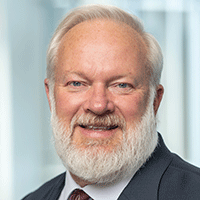
Kenneth (Ken) S. Ball, Ph.D., P.E.
Dean, College of Engineering and Computing
George Mason University
Kenneth S. Ball, PhD, PE is Dean of the College of Engineering and Computing at George Mason University in Fairfax, Virginia. Since arriving at Mason in 2012, Ball has led the college through extensive growth and rapid change, increasing research awards and expenditures, expanding enrollment, and establishing several first-of-their-kind programs to attract future generations of engineering and computing professionals.
Under Ball's leadership, the college's ranking and reputation have improved. In the most recent U.S. News and World Report rankings of our nation's Best Graduate Schools, the college placed in the top 100 among public universities. Ball helped the college keep pace with its strong growth in student enrollment, advocating for more faculty and staff. He led a proactive response to the needs of our students, placing a high priority on ensuring the college has the faculty to maintain student-faculty ratios to allow vigorous levels of student-faculty interaction and mentoring, to limit the number of large-enrollment classes, and to be able to offer all of the courses that students need to graduate, including elective courses. These efforts keep diversity and inclusion at the forefront by expanding access and inclusion.
Ball's service to engineering education led to him to chair ASEE's Engineering Dean’s Council, and in 2024, he was elected to the Virginia Academy of Science, Engineering, and Medicine (VASEM). He is recognized internationally for his research in computational fluid dynamics and heat transfer. He has chaired three international conferences, is a past associate technical editor of the ASME Journal of Heat Transfer, and has served on several other engineering journal editorial boards. He is deeply involved in engineering program assessment and accreditation activities, both in the U.S. and internationally, particularly in the Middle East. He has obtained externally sponsored funding (excluding high-performance computing grants) more than $20M for projects and program development in mechanical engineering, including the thermal/fluid sciences and nuclear engineering.
Prior to coming to Mason Ball served as the L.S. Randolph Professor and Head of the Department of Mechanical Engineering at Virginia Tech from 2004-12, Prior to his appointment at Virginia Tech, he served for 15 years on the mechanical engineering faculty at The University of Texas at Austin, where he was the Temple Foundation Endowed Faculty Fellow in Engineering.

Thomas Costabile, P.E., FASME
Executive Director/CEO
ASME
Tom Costabile is a visionary business leader renowned for his strategic acumen in orchestrating transformative mergers and acquisitions that have revolutionized industries and spearheaded cutting-edge digital transformation.
With a keen eye for identifying synergies, Tom has consistently demonstrated his ability to navigate complex negotiations and drive transformative deals that drive growth and innovation.
His track record of executing high-impact M&A transactions speaks to his exceptional leadership and unwavering commitment to driving business success through strategic partnerships.
A dynamic force in the mechanical engineering space, Costabile, ASME's Executive Director/CEO, has dedicated the last seven years to establishing ASME as a global leader while championing the technical and societal contributions of engineers. Known for his calculated risk-taking and profound industry insights, he has been a vocal advocate for engineering education and career development. He orchestrated ASME’s acquisition of Techstreet, aiming to diversify the revenue stream and explore opportunities in the for-profit arena.
With a focus on driving progress in key technology sectors such as manufacturing, bioengineering, robotics, clean energy, and pressure technology, Costabile has been instrumental in the development of groundbreaking products, services, and programs within code and standards development; solidifying his reputation as a pioneering force in the field of engineering.
Before embarking on his transformative journey with ASME, Tom Costabile blazed a trail of innovation across diverse industries. His tenure as a consultant at Carlan Advisors and as a partner at 3ssentials, LLC showcased his acumen as a forward-thinking private equity investor. In the realm of music distribution, he ascended to an executive leadership position at industry giants such as SONY Music, WEA Manufacturing-Warner Music Group, and CBS Records, and played a pivotal role in shaping the future of these industry giants.
Costabile's legacy is defined by his trailblazing approach to developing cutting-edge business strategies, incubating disruptive business models, and revolutionizing channel programs. His innate ability to drive innovation and chart new pathways to success has established him as a leader who thrives on pushing boundaries and redefining industry norms.
Tom, a dedicated philanthropist, chaired the University of Oregon Foundation's Board and achieved the distinction of being its first president to serve a two-year term. His visionary leadership facilitated a groundbreaking billion-dollar campaign cabinet donation. ASME Strategic Communications December 2025.
Presently, he contributes his expertise as a valued member of the Board of Trustees at the esteemed Montgomery Academy. Notably, he also initiated a scholarship endowment specifically for women in engineering.
Costabile is a licensed professional mechanical engineer. With a Finance MBA and a bachelor's degree in mechanical engineering, he brings a robust educational background to his professional endeavors.

Lester K. Su, Ph.D.
President
ASME
Lester K. Su, Ph.D., has begun his term as the 144th president of the American Society of Mechanical Engineers (ASME), the Society announced during its annual meeting on June 8. Su, an ASME member and active volunteer, is a lecturer in the mechanical engineering department at Stanford University. His areas of expertise are experimental fluid mechanics, thermal sciences, and turbulent flows.
Mr. Su previously served as a faculty member in mechanical engineering at the Johns Hopkins University (JHU) and the University of Wisconsin. At JHU, he received a National Science Foundation CAREER award, won a Diversity Recognition Award from the university, and received teaching awards from the JHU Alumni Association, school of engineering, and student government association. He also served as an ASME Congressional Fellow in 2000-2001 in the office of Rep. Vernon Ehlers, where he worked on issues including STEM education and funding for basic research in engineering and the sciences.
As a volunteer with ASME for over 20 years, Su was the senior vice president of the Public Affairs and Outreach Sector and a member of the Philanthropy Committee. Previously, he chaired the Committee on Government Relations and the Federal Fellows selection committee, was an alternate to the Nominating Committee, and was the faculty advisor for the JHU Student Section. While at JHU, he founded an outreach program to introduce middle school girls to engineering that was awarded three ASME Diversity Action Grants.
Su earned a Bachelor of Arts degree in physics from the University of Chicago and did his graduate work at the University of Michigan, where he earned Master of Science degrees in mathematics and engineering and a Ph.D. in aerospace engineering. He also did post-doctoral work at the University of Texas and Stanford University.
N. K. Anand, Ph.D.
Regents Professor
Texas A&M University
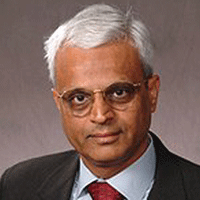
N. K. Anand (“NK”) is a distinguished academic and researcher, currently holding the rank of Regents Professor at Texas A&M University. NK earned his Ph.D. in Mechanical Engineering from Purdue University in 1983. He gained valuable industry experience as a Systems Engineer with the Link Division of the Singer Company in Silver Spring, Maryland (1983-85). He launched his academic career at Texas A&M University in 1985. Throughout his tenure, NK has demonstrated exceptional leadership, serving in multiple key roles within the College of Engineering and across the university. He is a Fellow of the American Society of Mechanical Engineers (ASME), a testament to his significant contributions to the field. In 2020, NK was awarded the prestigious ASME Harry Potter Gold Medal for "outstanding contributions as a teacher of thermodynamics and related topics, and as a researcher who has advanced the state-of-the-art design of alternate refrigerant condensers, cooling strategies for electronic packages, and aerosol transport lines." A prolific scholar, NK has co-authored a definitive book on finite element and finite volume methods tailored for heat transfer and fluid dynamics. His current research is focused on Reduced Order Modeling of turbulent flow and heat transfer phenomena; The innovative application of Physics-Informed Neural Networks (PINNs) for the accurate prediction of complex compressible flows; and Characterization of transport of graphite particles in Generation IV Nuclear Reactors.

Melody Baglione, Ph.D.
Professor and George Clark Chair of Mechanical Engineering
Cooper Union
Melody Baglione is Professor and George Clark Chair of Mechanical Engineering, as well as the inaugural IDC Foundation Distinguished Professor at The Cooper Union. She earned her Ph.D. from the University of Michigan and previously worked as a powertrain systems engineer and management consultant. Baglione served as PI on an NSF TUES award integrating building sustainability into the curriculum and engaging students in building systems optimization and decarbonization projects. Under her leadership, Cooper Union secured NYSERDA funding through the REV Campus Challenge Technical Assistance and Workforce Training programs, supporting campus-wide energy audits, retro commissioning, and climate action planning. She has collaborated across disciplines to develop courses including Energy Efficient Building Systems, Environmental Technologies, Solar Decathlon, Smart Cities Vertically Integrated Projects, Interdisciplinary Capstone Projects, and a new Building Design Collaborative course. Her work strengthens interdisciplinary learning and builds partnerships with industry, community organizations, and government agencies, enriching students hands-on, project-based experiences.
Arindam Banerjee, Ph.D.
Paul B. Reinhold Professor and Department Chair
Mechanical Engineering & Mechanics, Lehigh University
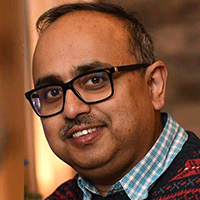
Arindam Banerjee is Professor and Chair of Mechanical Engineering and Mechanics at Lehigh University, where he provides academic and strategic leadership for undergraduate and graduate programs, faculty development, and curriculum innovation. His scholarly background is in fluid mechanics and energy systems, with research spanning renewable energy, turbulence, and data-enabled modeling.
As department chair, Dr. Banerjee has focused on guiding his department through curricular modernization, balancing foundational mechanical engineering content with emerging areas such as artificial intelligence and data-driven engineering. He has led initiatives related to faculty capacity building, industry engagement, and outcome-based assessment, with particular attention to workforce relevance and program sustainability. Dr. Banerjee is actively engaged in national discussions among ME chairs and engineering leaders on the role of AI in mechanical engineering education, accreditation considerations, and cross-institutional collaboration, bringing a pragmatic, leadership-oriented perspective to educational change.

Colleen Fitzpatrick Berg
Associate Chair for Undergraduate Programs & Instructor, Department of Mechanical Engineering
George Mason University
Colleen F. Berg serves as an Instructor and Associate Chair in the Department of Mechanical Engineering at George Mason University. She holds a B.S. in Mechanical Engineering and an M.S. in Computer Science. Since 2006, she has taught a broad range of undergraduate engineering courses, specializing in areas that integrate computational and physical systems. Prior to joining academia, she gained industry experience in flight software. Her interests include engineering education, and the design of effective, hands on learning environments that support student success.

Jonathan Cagan, Ph.D.
David and Susan Coulter Head of Mechanical Engineering and George Tallman and Florence Barrett Ladd Professor
Carnegie Mellon University
Jonathan Cagan is the David and Susan Coulter Head of Mechanical Engineering and George Tallman and Florence Barrett Ladd Professor at Carnegie Mellon University, with an appointment in Design. Cagan also served as Interim Dean of the College of Engineering and Special Advisor to the Provost. Cagan co-founded the Integrated Innovation Institute for interdisciplinary design education at CMU, bringing engineering, design and business together to create new products and services. Cagan's research focuses on design automation and methods, problem solving, and medical technologies. His work merges AI, machine learning, and optimization methods with cognitive- and neuro-science problem solving. A Fellow of the American Society of Mechanical Engineers, Cagan has been awarded the ASME Computers and Information in Engineering Division Lifetime Achievement Award, Design Theory and Methodology, Design Automation, and Ruth and Joel Spira Outstanding Design Educator Awards. He is also a Fellow of the American Association for the Advancement of Science.

Jenna P. Carpenter, Ph.D.
Dean and Professor, School of Engineering
Campbell University
Dr. Jenna P. Carpenter is Founding Dean and Professor of Engineering, Campbell University and President of the Mathematical Association of America. She sits on ABET's Engineering Accreditation Commission, representing ASEE (American Society for Engineering Education), and serves on the Editorial Board of Math Horizons. A national expert and thought leader in innovative STEM curricula and workforce development, she is Past President and Fellow of ASEE and 2023 ASEE Hall of Fame Inductee. She received the 2023 ABET Claire Felbinger Award and 2019 ASEE Sharon Keillor Award. She was co-recipient of the 2022 National Academy of Engineering Bernard M. Gordon Prize for Innovation in Engineering and Engineering Technology Education as co-founder of the Grand Challenges Scholars Program. Carpenter, past president of the Women in Engineering ProActive Network (WEPAN), received the 2018 WEPAN Founder's Award. She was appointed to the President's National Infrastructure Advisory Council SubCommittee on Expanding the Workforce in 2024.

Leah Chong, Ph.D.
Assistant Professor
The University of Texas at Austin,
Walker Department of Mechanical Engineering
Dr. Leah Chong is an Assistant Professor in the Walker Department of Mechanical Engineering at the University of Texas (UT) at Austin. Prior to UT, she was a postdoctoral associate at Massachusetts Institute of Technology and received her PhD and MSÂ degrees at Carnegie Mellon University and BS degree at Rice University, all in Mechanical Engineering. Her research focuses on human-AI design interaction and teaming, understanding how the integration of computational tools/agents in the engineering design process affects the way engineers think, feel, and make decisions, as well as pioneering opportunities for human-centered and complementary partnership between engineers and AI. Some ongoing topics of research include: AI-assisted decision-making, qualitative design with AI, interactive and adaptable AI systems, and artificial empathy.

Irina N Ciobanescu Husanu, Ph.D.
Clinical Professor and Department Head
Drexel University
Irina Ciobanescu Husanu, Ph.D., is a Clinical Professor at Drexel University in Philadelphia, PA, serving as Department Head of Engineering, Leadership, and Society and Director of the Engineering Technology Program. She earned her Ph.D. in Mechanical Engineering from Drexel University and her B.S./M.S. in Aeronautical Engineering from the Polytechnic University of Bucharest, Romania, with a foundation in propulsion systems and combustion. With more than a decade of aerospace industry experience, she brings a practice-based perspective to engineering education focused on decision-making under uncertainty, systems thinking, and real-world impact. Her leadership centers on curricular transformation aligned with industry needs, emerging technologies, and societal challenges. Her research and educational initiatives span engineering pedagogy, sustainability, renewable energy, and immersive learning (VR/XR), and she fosters strong industry academia partnerships through senior design and applied, inclusive learning environments.

Sorin Cioc, Ph.D.
Clinical Professor
University of Toledo
Dr. Sorin Cioc is a Clinical Professor and Undergraduate Program Director in the Department of Mechanical, Industrial, and Manufacturing Engineering at The University of Toledo. With dual Ph.D. degrees in Aerospace Engineering and Mechanical Engineering, his academic background spans flight dynamics, tribology, fluid mechanics, and computational methods. His research includes contributions to elastohydrodynamic lubrication, fluid film bearings, heat transfer, and STEM education innovation. Dr. Cioc has an extensive publication record and a long-standing commitment to engineering pedagogy, senior design mentorship, and hands-on experiential learning. Over more than two decades at UToledo, he has taught a broad range of mechanical engineering courses and is consistently recognized by students for his supportive, rigorous, and engaging teaching style.
Robin Coger, Ph.D.
Engineering Professor
East Carolina University
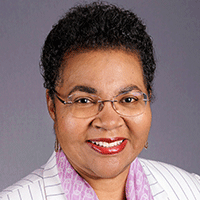
Dr. Robin N. Coger is an academic leader whose service has spanned the roles of provost, engineering dean, department chair, center director, and professor. She has chaired the Advisory Committee of the Engineering Directorate of the National Science Foundation, serves on the editorial board of the American Society for Engineering Education publication, PRISM; and is a Board member of FIRST – an organization that inspires the interest and participation of young people in engineering, science and technology.
Dr. Coger's technical research expertise is in leveraging AI agents to design STEM instructional materials, and solving performance problems related to tissue engineered organs -- with emphasis on liver replacement devices and their safe storage for off-the-shelf availability. Her work has been supported by grants from the NIH, NSF and other agencies, and has resulted in numerous publications and one patent.
Dr. Coger has been awarded for her excellence in leadership, research, teaching, and mentoring throughout her career. She is a fellow of the American Society of Mechanical Engineers and of the American Institute for Medical and Biological Engineering.
Dr. Coger earned a Bachelor of Science from Cornell University, and her Master of Science and Doctoral degrees from the University of California – Berkeley, all in Mechanical Engineering. She completed her post-doctoral research at Harvard Medical School and the Department of Surgery at Massachusetts General Hospital in Boston.

Ronn Cort
President
Dunmore International, A Steel Partners Company
Ronn Cort is President of Dunmore International, a Steel Partners company and global manufacturer of advanced materials for aerospace, satellite, and space markets. With over two decades leading material manufacturing organizations, he has built a reputation for driving large-scale transformation that delivers measurable results.
At Dunmore, Cort is spearheading the integration of AI across operations, from quality systems and predictive maintenance to workforce enablement, demonstrating how mid-sized manufacturers can adopt emerging technology without losing focus on fundamentals.
Cort holds credentials from Stanford Graduate School of Business and an honorary doctorate from Commonwealth University in Pennsylvania. His work has been featured in the Wall Street Journal, Plastics Technology, and Vistage Magazine.
At the core, Cort is a builder of teams, systems, and ideas that move manufacturing forward.

Joseph Daly
Student
George Mason University
Joe Daly is a senior mechanical engineering student at George Mason University who founded Mason's high power rocketry team, serves as vice president of its AIAA chapter, and has worked three internships in satellite operations. A student member of ASME, he is deeply interested in mechanical engineering education and values student-led mentoring and workshops. One of his favorite recent technical electives was Machine Learning for Mechanical Engineers, which delved into practical considerations and for applying machine learning techniques to real-world problems. Joe is active in several student organizations, most recently organizing a CAD speed modeling event with Mason's ASME chapter.
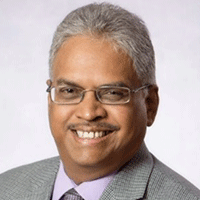
Raju Dandu, Ph.D.
Professor & Director, Bulk Solids Innovation Center
Kansas State University–Salina
Dr. Raju Dandu is a Professor of Mechanical Engineering Technology with academic experience across Asia, Europe, and North America. He earned his Ph.D. in Mechanical Engineering from North Dakota State University, Diploma Engineer in Thermal and Nuclear Power Engineering from Slovak Technical University, and Diploma in Automobile Engineering from Andhra Polytechnic. At Kansas State University Salina, he served as Director of the Bulk Solids Innovation Center and Graduate Program Director. He is the Past Chair of ETAC of ABET and served on ASME Committee on Engineering Education and the American Society for Engineering Education Board of Directors. His expertise includes product design, manufacturing, industrial automation, and Lean Six Sigma. He teaches multidisciplinary capstone design integrating modeling, simulation, manufacturing, IIoT, and augmented reality, and consults in automation, certification, reliability, and workforce development. Dr. Dandu is fluent in Telugu, English, Slovak, and Czech, and conversant in Hindi, Russian, Spanish, and Arabic.

Maria Emelianenko, Ph.D.
Professor and Department Chair of Mathematical Sciences
George Mason University
Dr. Maria Emelianenko joined George Mason University in 2007 and is currently the Department Chair of the Department of Mathematical Sciences and a Professor in Mathematics. Maria received her B.S. in Applied Mathematics from Moscow State University, and her Ph.D. in Mathematics from the Pennsylvania State University focusing on numerical methods and interdisciplinary mathematics. She completed a postdoc at Carnegie Mellon University where she worked with mathematicians, materials scientists and biologists as part of the Center for Nonlinear Analysis. In the last 18 years Maria continued working at the interface between mathematics and other areas of science and engineering, such as materials science, chemistry and biology. Dr. Emelianenko’s work has been supported by several National Science Foundation (NSF) grants, including the 2011 NSF CAREER award. She served as an Associate Director of the Quantum Science and Engineering Center and co-directed several outreach and undergraduate research programs, including the first NSF-funded REU SITE at Mason.

Paul Fakes
Director, Government Relations
ASME
Paul Fakes serves as a Director in ASME's Government Relations department in Washington, D.C., where he leads the Society’s education and outreach initiatives on clean energy, intellectual property, federal R&D, and standards policy. His areas of expertise include the U.S. federal budget and appropriations process, science and technology policy, and international regulatory affairs. Prior to joining ASME in 2010, Paul worked as a legislative aide on the Senate Finance Committee, managing tax and trade issues, and as a private consultant on international trade and development projects.

Amir Barati Farimani
Russel V. Trader Associate Professor of Mechanical Engineering
Carnegie Mellon University
Amir Barati Farimani is the Russel V. Trader Associate Professor of Mechanical Engineering at Carnegie Mellon University, with courtesy appointments in Machine Learning, Chemical Engineering, Biomedical Engineering, and Materials Science and Engineering. He leads the Mechanical and Artificial Intelligence Lab (MAIL), where his research focuses on developing foundation models for science and engineering, spanning materials discovery, molecular modeling, and AI-accelerated simulation of partial differential equations. His work integrates physics-based modeling with modern machine learning, including transformers, neural operators, and generative models, to enable scalable digital twins and next-generation engineering design tools.
He received his Ph.D. in Mechanical Science and Engineering from the University of Illinois at Urbana–Champaign and completed postdoctoral training at Stanford University in computational biology and AI, where he combined machine learning and molecular dynamics to study biomolecular systems.
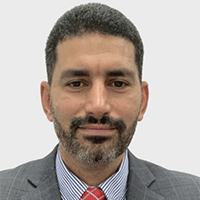
Ahmad Fayed, Ph.D.
Interim Department Head, and Associate Professor of Engineering Technology
Southeastern Louisiana University
Dr. AHMAD FAYED is the Bell South Endowed Professor, Interim Department Head, and Associate Professor of Engineering Technology at the Department of Industrial and Engineering Technology, Southeastern Louisiana University (SELU). He is currently serving as the chair of the ASMEs Mechanical Engineering Leadership Committee as METLC, and the chair-elect of the ASMEs Committee on Engineering Education - CEE. He earned a B.S. in Mechanical Engineering from Al-Azhar University, a M.S. in Mechanical Engineering from King Saud University, and a Ph.D. in Mechanical Engineering from University of Nevada Las Vegas (UNLV). His academic career spanning several esteemed institutions, including Purdue University Northwest (PNW) the University of Nevada Reno (UNR), University of Nevada Las Vegas, and Al-Azhar University. His research interests include Engineering Education, Additive Manufacturing, Computer Vision, Robotics, Active Vibration Control, and Optimization. He can be reached at ahmad.fayed@selu.edu and bit.ly/ProfFayed.
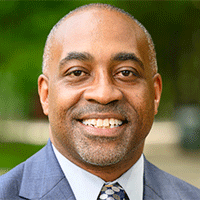
Lewis E. Forrest, II
Assistant Vice President
University Life
Lewis E. Forrest II, M. Ed. is currently an Assistant Vice President for University Life at George Mason University. His portfolio includes Mason Recreation, Regional Campuses: Mason Square and Sci-Tech, The Office of International Programs and Services, and Co-Leadership of the UL Engagement Student Journey Team. He also has several responsibilities related to awareness and education initiatives specific to campus Well-Being; these initiatives include Mason Chooses Kindness, and CliftonStrengths.
He is an Alum of Mason (1996) receiving his Bachelor of Arts degree in English with a minor in African American Studies. He holds a Master's degree in K-12, Counseling and Development and served several years as a Professional School Counselor.
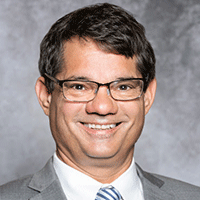
Ernie Friend, Ph.D.
Executive Director
Florida Advanced Technological Education Center (FLATE)
Ernie Friend, Executive Director of the Florida Advanced Technological Education Center (FLATE). FLATE is part of the FloridaMakes Network, providing manufacturing and advanced technical education, best practices, and resources that support a high-performance, skilled workforce for Florida's manufacturing sectors. Ernie came to FLATE in January 2022 after 25 years at Florida State College at Jacksonville, where he served in various admin roles in IT, Manufacturing, and related technology bachelor's and associate degree programs.
Mr. Friend was selected as the 2018 National Science Foundation (NSF) HI-TEC Educator of the Year. As a former National Convergence Technology Center member, Mr. Friend contributes significantly to the national dialogue on the skill sets required for emerging information technology occupations. Mr. Friend has led or participated in more than a dozen National Science Foundation and Department of Labor grants focused on developing new curricula, faculty professional development, and student engagement in high-tech fields. He served on the U.S. Department of Commerce National Institute of Standards and Technology (NIST) committee that designed new cybersecurity standards, and his college's computer networking program, which he led, received the National Security Agency (NSA) designation as a Center of Academic Excellence.
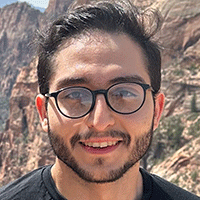
Amin Heyrani Nobari
Post-Doctoral Associate
Massachusetts Institute of Technology
Works at the intersection of Artificial Intelligence (AI), optimization, and engineering design, where I focus on developing principled, precise, and computationally efficient AI methods that address the unique challenges faced by scientific and engineering communities. In this pursuit, he's created models that integrate deep learning and generative AI with robust, theoretically grounded, and time-tested methods from optimization and computational engineering. My research enables foundational, general-purpose approaches that advance multiple areas of engineering design, including Robotics, Mechanism Design, Numerical Methods, Optimization, and CAD.
Over the past 5 years, Amin has been involved in teaching and has actively worked on designing and adapting course material for a newly designed course on artificial intelligence (AI) for design. Throughout this time, he has helped to teach and mentor students. Through year-over-year adaptation and improvement of course materials, Amin sought to enrich the student experience further and gain a deeper understanding of student perspectives.

Crystal Jones, Ph.D.
Senior Director of Workforce Partnerships
The Ohio Association of Community Colleges (OACC)
Dr. Crystal Jones has over eighteen years of experience in higher education and ten years devoted to industry-specific areas, including business, customer service, marketing, healthcare administration, insurance, diversity, and leadership.
Jones not only has an adoration for higher education but a lifelong passion for advocacy. Her leadership and experience in supporting individuals is demonstrated through her participation in outreach programs, tutoring, not-for-profit startups, mentoring, and other professional settings.
Jones has also fostered a plethora of partnerships focused on workforce development. These partnerships include the following career clusters: Manufacturing, Healthcare, Agriculture, Technology, Logistics, Food Service, and Insurance. These partnerships are focused on innovation, planning, financial stewardship, recruitment, talent development, and shared governance.
Her professional journey began in industry; that experience led to an adjunct position teaching in the Management and Medical Office Administration programs. After teaching part-time for less than a year, she moved into a full-time position working in both programs. Since that day, she has worked as a program coordinator, committee chair, assistant dean, college credit plus liaison, grant coordinator, advisor, as the Vice President for Marketing, Diversity, and Community Impact, and currently as the Senior Director of Workforce Partnerships at OACC and Director of the OSCN.
She began her educational journey at Clark State College and earned her bachelor's degrees in organizational leadership and human services from Urbana University. She then attained an MBA with an emphasis in Healthcare Management from American Intercontinental University and completed her Doctorate in leadership in higher education at Capella University in 2023. She is also an alumnus of the OACC Leadership Academy and Leadership Ohio.

Vukica Jovanovic, Ph.D.
Department Chair of Engineering Technology
Old Dominion University
Dr. Vukica Jovanovic is Chair of the Engineering Technology Department at Old Dominion University and a leader in digital manufacturing, mechatronics, and smart manufacturing systems. Her work integrates cyber-physical systems, robotics, and the digital thread to advance modern production, workforce development, and applied engineering education. She has led or contributed to more than two dozen funded projects totaling over $6.5 million, collaborating with industry, federal agencies, and education partners to strengthen pathways in advanced manufacturing and engineering technology. Her research spans manufacturing cybersecurity, digital twins, automation, and experiential learning models that connect students with real-world engineering challenges. A prolific scholar, she has authored numerous journal papers, book chapters, and conference publications while mentoring nearly 100 student design and research projects. At the American Society of Mechanical Engineers MEED Conference, she brings expertise in bridging engineering practice, emerging manufacturing technologies, and scalable educational innovation that prepares a resilient, future-ready technical workforce.

Nafiz Karabudak
Corporate Global Science & Technology Manager
Lockheed Martin
Nafiz Karabudak is currently Lockheed Martin Corporate Global Science & Technology Manager responsible for Strategic Early-Stage Research Programs and Technology Partnership development with Academia, Industry, and Government sponsors for Lockheed Martin Corporation. Previously Mr. Karabudak served as Sr. Manager responsible for Payload Engineering at Lockheed Martin Space business area for MilSat Communication and Remote Sensing programs including Deep Space missions, Mr. Karabudak also has a proven track record in Global Technology and Engineering with demonstrated expertise especially in the areas of Radar & EW, Missile Electronics, Autonomous Systems/Payloads, RF & Microwave Systems, Microelectronics in the US and International Technology and Offset Programs with extensive in-country experience in Europe, Asia, and Australia.

Tom Kurfess, Ph.D., P.E.
Professor
Georgia Institute Technology
Thomas R. Kurfess is a Regents Professor of Mechanical Engineering at Georgia Tech and CTO at the National Center for Manufacturing Sciences. He received his S.B., S.M. and Ph.D. degrees in ME from M.I.T. in 1986, 1987 and 1989, respectively. He also received an S.M. degree from M.I.T. in EECS in 1988. His research focuses on the design and development of advanced manufacturing systems targeting secure digital manufacturing, additive and subtractive processes, and large-scale production enterprises. He is an elected member of the National Academy of Engineering and is a Fellow of ASME, AAAS, and SME.

Siu Ling (Pansy) Leung, Ph.D.
Associate Head for Undergraduate Programs
Penn State University
Dr. Siu Ling Leung is an Associate Teaching Professor in the Department of Mechanical Engineering at Pennsylvania State University, where she also serves as Associate Department Head for Undergraduate Programs and Director of Undergraduate Laboratories. Her work focuses on advancing undergraduate and laboratory curricula to strengthen student's cognitive skills and prepare them to address real-world engineering challenges.
In her leadership work, Dr. Leung oversees undergraduate curriculum planning, advising structures, faculty coordination, and ABET assessment and continuous improvement across multiple campuses. She has led major curriculum revisions in both Mechanical and Biomedical Engineering programs and supports faculty in course redesign and laboratory innovation.
Her research and publications focus on engineering education innovation, including collaborative and problem-based learning, laboratory pedagogy, hands-on experimentation, and pedagogical strategies that connect theoretical learning to real-world engineering applications while fostering engaging and inclusive learning environments.
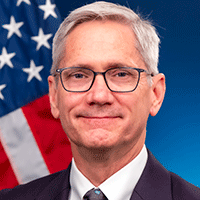
John Main, Ph.D.
Deputy Director, Tactical Technology Office
DARPA
John Main, Ph.D., is the deputy director of the Tactical Technology Office, a role he assumed in July 2023. Prior to this assignment, he was associate vice president of research at George Mason University. Main has spent much of his career developing new technologies and businesses. He started as an engineering professor teaching and running a research lab developing adaptive optics. That led to a research program funded by DARPA, which led to two terms as a DARPA program manager in the Defense Sciences Office where he created programs in high-speed swimming, diver navigation, improvised weapons, climbing tools, and shape-changing materials. He then served three years as chief scientist in the Research Directorate at the National Geospatial-Intelligence Agency (NGA). He has also founded a manufacturing company specializing in medical research instruments and served as chief operating officer of a startup company providing mission rehearsal simulation software.

Andre W. Marshall, Ph.D.
Vice president for Research, Innovation, and Economic Impact
George Mason University
Dr. Andre W. Marshall is vice president for Research, Innovation, and Economic Impact at George Mason University, where he leads the university's research enterprise and innovation ecosystem and serves as president of the George Mason Research Foundation. As the university's chief research officer, he guides initiatives that strengthen George Mason University's position as a leading R1 institution and serves as the executive lead for President Washington’s Grand Challenge Initiative, a university-wide effort launched in 2025 to advance solutions for a peaceful, healthy, and prosperous future. Nationally, Marshall holds leadership roles in innovation and technology development, including vice chair of the board for the Cybersecurity Manufacturing Innovation Institute and service on the board of GENEDGE. Previously, he directed key programs at the National Science Foundation, advancing technology translation and entrepreneurship, and earlier was a faculty member at the University of Maryland, where he founded the Fire Testing and Evaluation Center and launched a startup based on his patented research. A recipient of the NSF Presidential Early Career Award and the Philip Thomas Medal of Excellence, Marshall is also a faculty member in George Mason University’s Department of Mechanical Engineering. He holds degrees from Georgia Tech and the University of Maryland.

Ivana Milanovic, Ph.D.
Professor
University of Hartford
Dr. Ivana Milanovic is a Professor of Mechanical Engineering at the University of Hartford, where she has served since 2001, including leadership as Chair of both the Mechanical Engineering and Mechanical Engineering Technology departments. A Ph.D. graduate of NYU Tandon School of Engineering, she is internationally recognized for transforming engineering education through simulation-integrated and inquiry-based instruction. Her curricular innovations have strengthened ABET-accredited programs and empowered students to reason with professional tools in ways that mirror real-world practice.
Her scholarly record includes over 100 peer-reviewed publications, NASA reports, conference papers, and software releases, with research spanning vortical flows, CFD, and multiphysics modeling. Her work has been supported by NASA, the World Bank, ARDEC, CCAT, and the Connecticut Space Grant Consortium.
A Fellow of ASME, Dr. Milanovic serves on the Fluids Engineering Division Executive Committee and co-chairs the Advances in Fluids Engineering Education topic. She is a Senior Member of AIAA, an active ASEE member, and was elected to the Connecticut Academy of Science and Engineering. Her honors include the ASEE Northeast Outstanding Teacher Award, the Women of Innovation Award from the State of Connecticut, and the Larsen and Bent Awards from the University of Hartford. She also supports K–12 STEM pathways through the Simsbury High School Engineering Advisory Board.

Todd Murphey, Ph.D.
Professor
Northwestern University
Todd Murphey is a Professor of Mechanical Engineering in the McCormick School of Engineering at Northwestern University, where he is also the Director of Transformative Research in the Office of Research. He received his Ph.D. in Control and Dynamical Systems from the California Institute of Technology in 2002. His research interests include robotics, control, robot learning, human-machine interaction, and emergent behavior in dynamical systems. He received the National Science Foundation CAREER award, received Northwestern University's Professorship of Teaching Excellence, received the IEEE RAS Distinguished Service Award, was a member of the United States Department of the Air Force Scientific Advisory Board, and is Editor of the IEEE Transactions on Robot Learning.
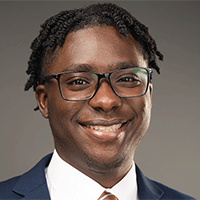
Jordan Nellums
Senior Policy Associate
The Century Foundation
Jordan Nellums is a Senior Policy Associate at The Century Foundation, where he focuses on higher education policy, including college affordability, finance, and funding inequities affecting Historically Black Colleges and Universities (HBCUs). He holds a Master of Public Affairs from the LBJ School at the University of Texas at Austin and a bachelor’s degree in political science from Texas A&M University. He is also a former Public Policy and International Affairs (PPIA) Junior Summer Institute Fellow at Carnegie Mellon University. Prior to joining The Century Foundation, Jordan worked in government relations for the Texas A&M System, engaging in both state and federal policy. He also served as a community organizer advocating for diversity, equity, and inclusion initiatives across Texas universities.

Mark Nolan
Associate Vice President of Corporate Engagement
Georgia Institute of Technology
Mark Nolan is the inaugural Associate Vice President of Corporate Engagement at the Georgia Institute of Technology, a role he assumed in January 2022. He founded Georgia Tech’s Office of Corporate Engagement by unifying the university’s corporate relations and industry research functions, advancing partnerships across research, education, and innovation. He reports jointly to the Executive Vice President for Research and the Vice President for Development.
Previously, Mark spent six years at Carnegie Mellon University, ultimately as Associate Vice President for Business Engagement and Strategy, where he launched the Center for Business Engagement and, for a period, oversaw Foundation Relations. His corporate engagement career began at the University of Illinois at Urbana-Champaign, where he spent 15 years strengthening industry partnerships.
Nationally recognized for implementing the "channels" framework, Mark advises university leaders on engagement strategy, organizational design, revenue growth, and performance metrics. He holds a BA from West Virginia Wesleyan College and an MS from the University of Illinois.

Shannon O'Donnell, MA
Global Future Workforce Engagement Lead
Siemens Digital Industries Software
Shannon O'Donnell is the Global Future Workforce Engagement Lead at Siemens Digital Industries Software, where she spearheads initiatives to bridge the critical skills gap between education and industry. Her team envisions and executes global programs, including the Immersive Design Challenge, engaging students from over 200 colleges, and a global student ambassador program, fostering real-world application of digital skills.
At Siemens Digital Industries Software, Ms. O'Donnell is focused on digital workforce transformation, empowering individuals with the mindset, skillset, and experiences to thrive in a complex technological landscape. This commitment was recognized in 2026 when Siemens Digital Industries Software was awarded the ASEE Corporate Membership Council Excellence in Engineering Education Collaboration Award for its partnership with the University of Colorado Boulder, an award Shannon accepted on behalf of her team. This collaboration resulted in the first industry-academia microcredential to be reviewed and recognized by ABET, setting a new standard in quality assurance for engineering education.
Shannon's expertise lies in driving global collaborations, connecting unique concepts for academia, and expanding opportunities for the next generation of talent. She is an active member across various ASEE divisions, a past chair of the College Industry Partnership Division board, and serves on the Global Engineering Dean’s Council.
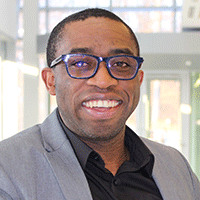
Chinedum Okwudire, Ph.D.
Professor of Mechanical Engineering
University of Michigan
Chinedum (Chi) Okwudire is a Professor of Mechanical Engineering at the University of Michigan. His research focuses on leveraging knowledge at the intersection of machine design, control, and computing to improve the performance of manufacturing automation systems at low cost. Chi has received a number of awards, including the CAREER Award from the National Science Foundation; the Young Investigator Award from the International Symposium on Flexible Automation; the Outstanding Young Manufacturing Engineer Award from SME; the Ralph Teetor Educational Award from SAE International; the Education Award from SME; and the Russell Severance Springer Visiting Professorship from UC Berkeley. In 2022, he was selected by SME as one of the 25 leaders transforming manufacturing. He has co-authored several award-winning papers in manufacturing automation, control, and mechatronics. He is the founder and CEO of Ulendo Technologies Inc., a company focused on advanced automation solutions for the manufacturing industry.

Ariela Sofer, Ph.D.
Divisional Dean, Volgenau School of Engineering, College of Engineering and Computing, Professor, Systems Engineering and Operations Research
George Mason University
Ariela Sofer is Professor and Divisional Dean of the Volgenau School of Engineering in the College of Engineering and Computing at George Mason University. She previously served as Interim Divisional Dean (2020–23) and Associate Dean for Administration and Faculty Affairs (2018–23), following 16 years as Chair of the Systems Engineering and Operations Research Department.
She is currently VP for Meetings of the Institute for Operations Research and Management Science (INFORMS) and a member of the Executive Committee of the IFEES, and has previously served as Academic Director of the International Council on Systems Engineering (INCOSE), Secretary of the Board of Trustees of IISE, VP for Sections and Societies of INFORMS, and President of the Association of Chairs of OR Departments (ACORD).
Dr. Sofer is co-author of the textbook Linear and Nonlinear Optimization (SIAM, 2008; McGraw-Hill, 1996). She is an elected Fellow of INFORMS (2016), IISE (2018), and INCOSE (2022).

Janis P. Terpenny, Ph.D.
Board of Governors
ASME
Janis P. Terpenny, Ph.D. currently serves as Program Director at the National Science Foundation (NSF), primarily focused on smart/intelligent manufacturing and systems. She is a rotator (IPA), on loan from George Mason University where she is professor of Systems Engineering & Operations Research and Mechanical Engineering. Janis has been actively involved with ASME for more than 20 years. She currently serves on the Executive Committee of ASME’s Board of Governors. Previously, she chaired ASME’s Intelligent Manufacturing Technology Group (IMTG) and on the Fellows Review Committee. She founded, and for 10 years chaired/co-chaired, the Broadening Participation Committee (BPart) for the ASME Design Engineering Division. She served as the first associate editor of design education for the Journal of Mechanical Design (JMD) and has organized sessions and presented papers at various ASME conferences for many years.
Dr. Terpenny has served in a number of leadership roles throughout her career. For example, she served as the Dean of Engineering at the University of Tennessee, Department Head of Industrial and Manufacturing Engineering at Penn State University and Department Chair at Iowa State University. She served as the first Technical Lead for the Advanced Manufacturing Enterprise (AME) area of the MxD Institute. She was co-founder and director of the NSF Center for e-Design. She has also been a professor at Virginia Tech in the departments of Engineering Education, Mechanical Engineering and Industrial and Systems Engineering; and in the department of Mechanical and Industrial Engineering at the University of Massachusetts Amherst. She has 9 years of industry work experience with GE. She is a Fellow and member of ASEE, ASME, and IISE and member of AAAS, INFORMS, SME, Alpha Pi Mu, and Tau Beta Pi.

Olga Pierrakos, Ph.D.
Program Director, Directorate of STEM Education
National Science Foundation
Dr. Olga Pierrakos (PhD) is a national higher education leader and innovator, an interdisciplinary biomedical and mechanical engineer, experienced educator, and mother of four. She is currently a STEM Education Program Director at the National Science Foundation (NSF) working across the education, engineering, and technology innovation directorates and managing a $300M+ portfolio of STEM education federal investments. Olga has founded two brand new U.S. engineering programs – Wake Forest University and James Madison University – demonstrating institutional and national transformation of engineering education. Prior to joining NSF for a second stint in January 2024, Olga served as the Founding Chair of Wake Forest Engineering (2017-2022) from launch to accreditation and led transformational change with a vision to Educate the Whole Engineer for Human Flourishing and positioned Wake Forest Engineering as the 14th Best Undergraduate Engineering Program (2023 US News Report, among 275 US institutions) and a top performing academic unit with sponsored research in just six years. Olga has a PhD in Biomedical Engineering and a MS and BS in Engineering Mechanics from Virginia Tech. She has leveraged STEM education research to transform engineering education and committed to reimagining higher education for student and societal flourishing.

Joseph J. Rencis, Ph.D., P.E.
Associate Dean of the School of Engineering and Professor
College of Aviation
Embry-Riddle Aeronautical University Worldwide
Dr. Rencis has a career spanning over forty years of experience in higher education and is a national leader in engineering education. He takes pride in being a first-generation college graduate with a humble background. He holds a B.S. in architectural and building construction engineering technology from Milwaukee School of Engineering and an M.S. and Ph.D. in civil engineering from Northwestern University and Case Western Reserve University. Dr. Rencis has served as a tenured professor of mechanical engineering and director of engineering mechanics at Worcester Polytechnic Institute. He was the department head of mechanical engineering at the University of Arkansas and dean of engineering at Tennessee Tech University and Cal Poly Pomona. He has served as interim dean of engineering at the University at Albany, SUNY, and the University of Texas Permian Basin. Dr. Rencis has also served as interim department head of mechanical engineering at the University of Texas at Dallas. He is currently the inaugural associate dean of the school of engineering within the college of aviation at Embry-Riddle Aeronautical Worldwide. Dr. Rencis has made a significant contribution to the field of mechanical engineering by serving as chair and vice-chair of the ASME Mechanical Engineering Department Heads Committee and as president of the ASEE. He is a fellow of ASME and ASEE, and his research focuses on computational solid mechanics and engineering education. Dr. Rencis has won several awards; some include the ASME Edwin F. Church Medal, ASEE Hall of Fame, ASEE Mechanical Engineering Division Ralph Coats Roe Award, ASEE Isadore T. Davis Award for Excellence in Collaboration of Engineering Education and Industry, ASEE Mechanics Division Archie Higdon Distinguished Educator Award, and ASEE Northeastern Section Outstanding Teaching Award. Additionally, Dr. Rencis is a professional engineer in Massachusetts.

Xinxuan (Iris) Tang
Master student, Mechanical Engineering Department
Carnegie Mellon University
Xinxuan Tang is a Master's student in Mechanical Engineering at Carnegie Mellon University, specializing in medical device design and embodied intelligence. Her research focuses on leveraging machine learning to decode bio-signals (such as EMG) for intuitive human-machine interaction. She views this interdisciplinary synergy as the cornerstone of future engineering. Currently, she is particularly interested in the reciprocal loop where AI accelerates mechanical design and validation, while well-designed physical interfaces facilitate the collection of high-quality datasets. Having taken several artificial intelligence courses in the ME department, she believes that ME curricula must evolve to treat AI as a fundamental collaborative partner. On this panel, she will discuss how to integrate physical hardware design and data-driven intelligence in ME education.

Elissa Trueman, Ph.D., P.E.
Chief Technology Officer
Naval Surface Warfare Center (NSWC), Carderock Division
Dr. Elissa Trueman's career has focused on building capability for the Navy through bringing people, facilities, and resources together. Dr. Trueman began her career at Naval Surface Warfare Center (NSWC) Carderock Division (CD) over 20 years ago. Dr. Trueman currently serves as the Chief Technology Officer at NSWC Carderock Division, focusing on enabling new capability in all areas of Platform Integrity, Ships Signatures and Silencing Systems, and Naval Architecture and Engineering. She currently oversees the internal research and development portfolio, the technology transfer office, the command digital office, knowledge management, and the strategic education and outreach office. Dr. Trueman has a PhD in materials science and engineering from the University of Virginia, MS and BS in mechanical engineering from the University of Maryland, College Park and Florida Atlantic University, respectively. She is a licensed professional engineer in the Commonwealth of Virginia and State of Florida.
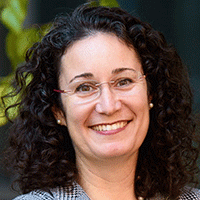
Sharon Walker, Ph.D.
Distinguished University Professor and Dean Emerita
Drexel University
Sharon Walker is an engineer, scholar, and higher-education leader who believes strongly in the power of universities to serve the public good. She has served as dean of two R1 engineering colleges (Drexel University and UC Riverside) and is currently a Distinguished University Professor and Dean Emerita at Drexel. She is deeply engaged nationally, having served as Chair of the Engineering Deans Council, on the Boards of ASEE and AEESP, and continues to serve on numerous academic and research advisory boards. At the heart of Sharon’s work is a passion for developing people and helping academic leaders thrive. She serves as Executive Director of ELATES, an internationally recognized leadership program for STEM faculty. She has also led three NSF ADVANCE grants focused on professional development, pay equity, and policy justice, and founded K-Line Executive Coaching and Consulting, where she partners with academic and education leaders navigating complexity, change, and growth.

Tom Walker
Manager of US Accreditation
ABET
Tom is ABET's Manager of US Accreditation, where he works with volunteers and institutions to oversee all elements of US reviews, as well as with ABET Commission leadership to support their efforts in delivering training and criteria changes. Prior to coming to ABET, Tom was the ABET society liaison for the American Society for Engineering Education. Tom holds a MA in Education Policy and Leadership from the University of Maryland and taught English Literature for four years before moving to the US. In his personal life, he fosters old or disabled dogs, enjoys playing and collecting specialist board games, and unwinds through cryptic crosswords and variant sudoku.

Mat Winter
Vice Admiral, US Navy Retired
Winter Strategic Solutions LLC
Mat Winter, a retired U.S. Navy Vice Admiral, is President of Winter Strategic Solutions, advising firms in venture capital, private equity, and national security. He serves as General Partner at Danu Venture Group and is an experienced Board Director credited with helping clients achieve their strategic investment, profitability and growth goals. Mat’s previous 35-year Navy career experience spanned from operational warfighting to senior acquisition executive, culminating as the 24th Chief of Naval Research, leading the Navy’s Global Science and Technology Enterprise, and F-35 Program Director, overseeing the multi-trillion-dollar global enterprise responsible for modernization, production and global supply chain operations. He holds advanced degrees from the University of Notre Dame, Naval Postgraduate School, and National Defense University and enjoys his lifelong hobby as an avid numismatist.
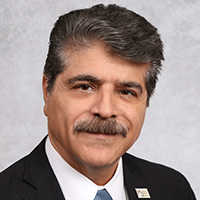
Mohammad A Zahraee, Ph.D., P.E.
Professor, Interim Dean of the College of Technology
Purdue University Northwest
Dr. Mohammad A Zahraee, a registered professional engineer, is Professor of Mechanical Engineering Technology and Interim Dean of the College of Technology at Purdue University Northwest. He has been an administrator for over 25 years, serving as a department chair, associate dean, and dean. Dr. Zahraee has also been PI and Co-PI, working on several NSF and DOL grants, totaling over four and half million dollars. He has also been the responsible for Industry Grants and contracts totaling over 2 Million Dollars. Professor Zahraee has served ABET as a program evaluator, commissioner (Accreditation Team Chair), Chair of the Technology accreditation commission and as a member of the ABET Board of Delegates and Directors. He has been the recipient of Purdue Northwest Outstanding Administrator Award, ASEE/CIEC Best Paper Presentation Award, Merl K. Miller Award for the Outstanding Computers in Education Journal Paper, and recipient of American Society of Mechanical Engineers (ASME) Ben C Sparks Medal for his contributions in Mechanical Engineering Education.

Five @ 5
Mike Gosz, Ph.D.
Associate Professor of Mechanical and Materials Engineering
Illinois Institute of Technology
Dr. Mike Gosz is an associate professor of Mechanical and Materials Engineering and an AWS Education Champion recognized for advancing cloud-based and data-driven engineering education. He brings a rare combination of faculty and senior academic leadership experience, having served as vice provost for undergraduate affairs, vice president for enrollment, and vice president for data analytics at Illinois Institute of Technology. In these roles, he led initiatives that improved student retention, strengthened academic programs, and contributed to sustained growth in first-year enrollment.
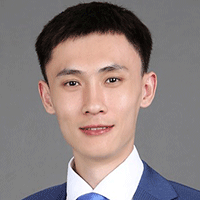
Qi Guo, Ph.D.
Assistant Professor
McNeese State University
Dr. Guo is a multidisciplinary faculty with expertise in the fields of economics, social science, and engineering. He obtained dual Bachelor's degreesin Mechanical Engineering and Business Administration, and also obtained Master's and Ph.D. degrees in Mechanical Engineering. Currently, Dr.Guo holds the position of Assistant Professor of Mechanical Engineering at McNeese State University. Dr. Guo has extensive experience teachingvarious classes in mechanical engineering. He has taught computer graphics, mechanics, thermos-fluids, engineering materials, manufacturing,and design, and energy efficiency and sustainability. He is a strong proponent of student-centered learning and actively incorporates active andhands-on learning approaches in his classes. By engaging students during class, Dr. Guo aims to create an environment where they can activelyparticipate and acquire practical knowledge that can be applied to real-world projects.
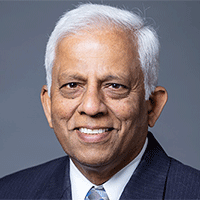
Nathan M. Kathir, Ph.D.
Professor and Director of Senior Projects ME Dept.
George Mason University
Nathan M. Kathir is a teaching professor and the director of senior projects for the ME Dept at George Mason Univ for the last six years. He has over 33 years of industry and government experience and a former commissioner and ExCom member of EAC of ABET. He has evaluated engineering programs at over 35 institutions worldwide, both as a Program Evaluator and as a Team chair. This has provided a breadth of engineering education methods in numerous countries and is a key factor in this proposed talk.

John Speich, Ph.D.
Professor
Virginia Commonwealth University
Dr. John Speich is a Professor of Mechanical and Nuclear Engineering (MNE) at Virginia Commonwealth University (VCU). He earned a B.S. in Mechanical Engineering from Tennessee Tech and a Ph.D. in Mechanical Engineering from Vanderbilt. He has been a faculty member at VCU for 25 years and recently served three years as the Interim/Acting Department Chair for MNE. His previous roles include Director of Undergraduate Studies and Associate Chair for MNE and Director of Cooperative Education for the College of Engineering.
Santosh Yadav
Senior Hardware Development Engineer
Amazon Robotics
Santosh Yadav is a Senior Hardware Development Engineer at Amazon with over 11 years of experience in high-speed machine design and industrial automation. A recognized innovator in kinematic synthesis and non-rigid material handling, he holds two US patents (US11268223 and US11939714) for pioneering automated systems. Santosh is a Professional Member of ASME and a Member of IEEE, contributing as a volunteer reviewer for the ASME Journal of Mechanical Design. His career spans the semiconductor and logistics sectors, where he focuses on scaling complex mechanical hardware. He is dedicated to bridging the gap between academic curriculum and industrial requirements to foster the next generation of robotics and automation experts.