Every visitor, delegate and exhibitor at the EXPO can attend any of the following presentations, FREE OF CHARGE. Each is delivered by one of the Exhibitors at the EXPO - all of them leading experts in their field.

Tuesday | 1:00 - 1:30pm


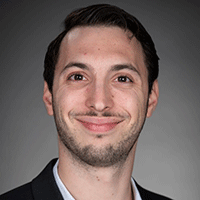
Presentation: Leveraging GPU and AI for faster Turbomachinery design cycle
Speaker: John Stokes, Software Engineering, Vice President
Description: Advances in GPU technology are transforming the computational landscape, enabling engineers to reach unprecedented speed and fidelity in their numerical simulations. This presentation highlights how Ansys CFD harnesses modern GPU architectures to deliver maximum value and lays the groundwork for use of AI technologies that are redefining productivity while opening entirely new possibilities for turbomachinery design and analysis.
Tuesday | 3:15 - 3:45pm


Presentation: VEM Sachsenwerk GmbH
Speaker: Francesco Bruzzo
Description: This talk presents Direct Energy Deposition (DED) as an industrial tool for enabling faster and more economical supply chains through integration in hybrid manufacturing chains. The focus is on two key industrial use cases:
- Large impellers: A hybrid manufacturing chain combining machining and DED significantly reduces material waste (~65%), production time (~30%), and costs (~20%), while meeting high-performance requirements and avoiding complex joining steps.
- Repair workflows: Hybrid repair strategies, based on material removal, DED re-manufacturing and finishing, enable efficient recovery of high-value components during production and service, reducing scrap and improving supply chain resilience.
These examples highlight how integrating DED into manufacturing chains allows companies to shift from material-intensive, time-consuming processes to more flexible and resource-efficient production routes.
The talk emphasizes the industrial impact: shorter lead times, lower costs, and increased supply chain robustness. Remaining challenges such as process qualification and design guidelines are discussed.
Wednesday | 1:00 - 1:30pm


Presentation: VEM Sachsenwerk GmbH
Speaker: Dr.-Ing. Robert Seifert
Description: The oil and gas industry must constantly reduce its CO2 emissions following e.g. the European Green Deal. That leads to a high demand for electric drives to substitute gas turbines in new as well as existing compressor plants and industrial heat pumps. To keep the footprint small and drivetrain short, especially for retrofits, gearless high-speed drives are preferred. Their variable frequency enables a more efficient process control without turbo gear boxes or throttle valves. To increase acceptance for high-speed drives in a broader market, motor manufacturers are challenged to offer simple and affordable solutions. Slide bearings are suitable for a large range of applications in this market, but oil-free active magnetic bearings (AMBs) can further reduce the environmental impact and eliminate contamination. They are maintenance-free and allow a simple condition monitoring in most compact plant installations. However, AMBs are costly and their commissioning comparatively time-consuming. After our first high speed prototype with three-lobe sleeve bearings from Renk, which we manufactured and tested with up to 17000 rpm in 2022, we now present a newly developed prototype. It has a revised solid rotor concept with copper cage, designed to mechanically withstand up to 18000 rpm, which also serves as a proof-of-concept for an oil-free alternative based on active magnetic bearings. In this presentation we give a brief introduction in the advantages of AMBs and give insights in the lessons we learned during the design, manufacturing and commissioning of our first in-house AMB concept for a turbo compressor drive (≈1 MW, 12 000. . .18 000 rpm).
Wednesday | 2:30 - 3:00pm


Presentation: Expanding application segments of active magnetic bearings with a new magnetic bearing controller Magma X100
Speaker: Nikita Uzhegov
Description: This presentation introduces Active Magnetic Bearings (AMBs) technology highlighting its current applications in turbomachinery. It explores the new market opportunities enabled by new magnetic bearing controller Magma X100, including small turbomachinery, hydrogen and cryogenic solutions, etc.
Wednesday | 3:15 - 3:45pm


Presentation: ML-Driven Optimization of Impeller Performance via Automated CFD workflow
Speaker: Ruggero Poletto, CEO - CFD FEA SERVICE SRL UNIPERSONALE
Description: he presentation details an innovative, ML-driven workflow for the optimization of turbomachinery impeller performance. Leveraging automated CFD (Computational Fluid Dynamics) via the turboAPP platform and OpenFOAM, we efficiently generate and analyze numerous geometry variations. The core methodology involves using the results of an initial set of CFD simulations to train a custom Machine Learning model (cloudIA), which then accurately predicts optimal performance geometries (power and efficiency). This integrated approach drastically accelerates the design cycle, allowing engineers to rapidly extrapolate new, optimized designs that are validated through final CFD verification.
Wednesday | 4:45 - 5:15pm


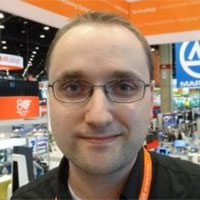
Presentation: Simulation of flexible operation of GT plants with THERMOFLOW software
Speaker: Ignacio Martín / Karsten Huschka
Description: With the increasing participation of renewable plants in the power generation sector thermal power plants specially Gas Turbines and CCGT are shifting from base load to flexible operation. The implications of such a change on the performance and economics of Gas Turbine plants need to be evaluated in detail.
Thermoflow offers advanced software tools to automatic design of CCGT plants based on a few assumptions and provides plant performance outputs, thermodynamic details as well as complete equipment specification and cost estimation. The plant can also be simulated at off design conditions such as load or ambient variation which allows to simulate the plant either standalone running at base load or integrated into a grid on flexible operation. Renewable plants such as PV and Wind in combination with storage systems can be added as well and the program simulates the performance of each plant on an hourly basis for a given demand curve and evaluates the flexible operation of thermal plants as back up of the renewables, shifting load every hour and with a large number of shut downs and starts per year, and its effect to the annual capacity factor, average efficiency, fuel consumed, CO2 emitted and financial parameters like LCOE. Different alternatives like multiple gas engines or GTs in open cycle and CCGT plants can be evaluated and compared.
Other options relevant to the energy transition such as CO2 capture, hydrogen production and use, gasification or advanced storage systems are also available.
Wednesday | 5:30 - 6:00pm


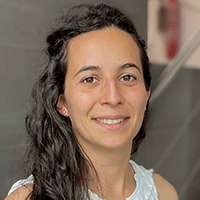
Presentation: A unified workflow for turbomachinery design, analysis, and optimization
Speaker: Margarita Campos
Description: This session demonstrates how an integrated Cadence workflow accelerates the design and optimization of centrifugal compressors, from early concept through high‑fidelity simulation.
We show how preliminary design tools can be seamlessly linked to Cadence’s high‑fidelity CFD environment, removing traditional bottlenecks between early design and detailed analysis. This integration enables engineers to explore a broader design space with significantly reduced manual effort.
The session then illustrates how turbomachinery‑focused simulations can be combined with machine learning to enable automated optimization, turning simulation data into a predictive asset that directly informs engineering decisions.
Finally, we provide an overview of the Cadence portfolio for high‑fidelity CFD, automated mesh generation for rotating machinery, GPU‑accelerated workflows, and multiphysics capabilities.
Thursday | 12:30 - 1:00pm


Presentation: Turbomachinery Applications in COMSOL Multiphysics®
Speaker: Jonas Helboe Jørgensen
Description: This presentation will cover the capabilities of the COMSOL Multiphysics® software for modeling and analyzing turbomachinery systems. The software can be used to study the underlying effects in systems, including computational fluid dynamics (CFD), heat transfer, acoustics, structural mechanics, and rotordynamics, as well as multiphysics phenomena such as vibroacoustics and aeroacoustics.
The presentation will also demonstrate how all stages of the simulation workflow can be performed within a single integrated environment. These stages include geometry preparation, material definition, physics setup, multiphysics coupling, meshing, solving, and results evaluation and visualization. By providing these capabilities within a single platform, COMSOL Multiphysics® helps streamline model development and analysis.
In addition, COMSOL Multiphysics® supports a wide range of CAD and mesh formats and enables the import of various file formats, including CGNS for flow data. The software can also be integrated with external CAD tools via interfacing products in the COMSOL product suite.