
Monday, July 27, 9:00am
Karen Thole
Evan Pugh Professor of Mechanical Engineering
Director of the National Security Institute
The Pennsylvania State University
Plenary Title: Bridging Research and Application: Transitioning Turbine Cooling Innovations from Lab to Industry
Abstract: Gas turbines are critical to both dispatchable electricity generation that stabilizes the grid amid AI-driven load growth, and propulsion systems that enable flight. Achieving high efficiency in these applications requires operating temperatures that far exceed the melting limits of turbine airfoils. This is made possible through advanced cooling technologies embedded within cast, single-crystal turbine blades. The development of these cooling technologies relies on a combination of physics-based research and the manufacturing innovations needed to realize them in engine-relevant components. Notably, manufacturing development often requires significantly more time—frequently exceeding two times that of the foundational physics research—resulting in overall research and development timelines that span decades.
While large-scale experimental studies, particularly in academic settings, continue to demonstrate promising cooling concepts, substantial challenges remain in translating these innovations to practical use. Key barriers include de-risking, integration into complex blade geometries, and manufacturability at scale.
This presentation examines these challenges through a series of case studies focused on transitioning laboratory-developed cooling technologies into fully cast, engine-scale turbine blades. It also explores the role of additive manufacturing as a complementary pathway for accelerating this transition, despite its own set of limitations. The lessons learned highlight critical issues related to manufacturability and variability in advanced cooling designs, particularly for prototype and limited-production components, and offer insights into more effectively bridging the gap between research and industrial application.
Biography: Karen A. Thole is the Evan Pugh Professor of Mechanical Engineering and Director of the National Security Institute at The Pennsylvania State University. She previously served as the Robert J. Vlasic Dean of Engineering at the University of Michigan. An expert in heat transfer and the cooling of gas turbine airfoils, Thole’s research has led to new designs now used in industry that improve aerodynamics, extend component life, and increase thermal efficiency. She has also led pioneering efforts in applying metal additive manufacturing to turbine research, enabling rapid evaluation of novel cooling technologies.
Prior to becoming dean, Thole spent 18 years on the faculty at Penn State, where she served as a Distinguished Professor and Head of the Department of Mechanical Engineering. During her tenure, she founded and directed the Steady Thermal Aero Research Turbine (START) Lab housing a sophisticated research turbine.
A member of the National Academy of Engineering and holding the title of Fellow of ASME, AIAA, and the Royal Aeronautical Society, Thole has been a member of NASA advisory committees and of the U. S. Department of Air Force's Scientific Advisory Board. Her work has been recognized by ASME’s Kate Gleason, R. Tom Sawyer, George Westinghouse, Edwin Church and Heat Transfer Memorial Awards. From AIAA, she has received the Mary Jackson Award, the Air Breathing Propulsion Award and the Thermophysics Award.
Tuesday, July 28, 8:00am
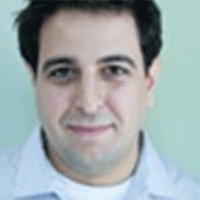
Husam Alissa
Senior Director of Systems Technology
Microsoft
Plenary Title: Cooling the Cloud
Abstract: As AI and accelerated computing drive rapid increases in power density, heat transfer has become a first order system constraint that shapes cooling architectures, power delivery, and sustainability outcomes. Thermal limits increasingly determine feasible rack power, electrical efficiency, and infrastructure scalability rather than simply bounding component performance.
This plenary presents a systems level view of how heat transfer fundamentals couple cooling, power, and environmental impact in large scale AI infrastructure. We examine the transition from air cooling to liquid and hybrid approaches, the need for thermal power co design, and how heat transport efficiency influences energy use, reliability, and system footprint. Drawing on hyperscale experience, the talk highlights key trade offs, lessons learned, and open heat transfer challenges critical to sustaining the next generation of AI systems.
Biography: Husam Alissa is a Senior Director of Systems Technology in Microsoft’s Cloud Operations & Innovation (CO+I) CTO Office, where he leads the development of next generation infrastructure for cloud and AI at hyperscale. He oversees technology development and vertical integration across silicon, servers, cooling, power, networking, sustainability, and full datacenter systems—driving innovations from early incubation to global fleet and deployment readiness.A recognized industry leader, Husam has pioneered advances in liquid cooling, microfluidics, cryogenic systems, high temperature superconductors, lifecycle sustainability, and AI era performance architectures. His work has contributed to shaping Microsoft's hardware and datacenter roadmap and has been repeatedly highlighted by Microsoft's CEO and major media outlets including Bloomberg, Reuters, The Seattle Times, The Verge, Latitude Media, and IEEE Spectrum. Husam has more than 140 filed and granted patents, over 70 peer reviewed publications, and a published book. He is a frequent speaker at DataCenterDynamics, the OCP Global Summit, and leading technical and commercial forums. His innovations have earned top honors including the DCD Mission Critical Tech Innovation Award, IEEE Micro Top Picks, and the ASME InterPACK Outstanding Paper Award.
Tuesday, July 28, 9:00am
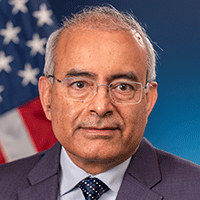
Yogendra Joshi
Professor and John M. McKenney and Warren D. Shiver Distinguished Chair
G.W. Woodruff School of Mechanical Engineering
Georgia Institute of Technology
Plenary Title: Emerging Heat Transfer Challenges in Information Processing, Sensing, and Communication
Abstract: Complementary metal oxide semiconductor (CMOS) transistor has been the backbone of the computing revolution ushered over five decades ago. With enormous fundamental physical, fabrication, and economic challenges facing continued CMOS scaling, three-dimensional heterogeneous integration (3DHI) has emerged as a promising path forward for continued growth of information processing microsystems. However, several heat transfer challenges must be addressed for the successful realization of 3DHI systems. I will discuss ongoing efforts to address these. Radio frequency (RF) devices are used in various sensing and communication microsystems. The emergence of GaN high electron mobility transistor (HEMT) presents a pathway for dramatically improved output power in RF power amplifiers, a key quest in communication and sensing systems. Inadequate heat transfer currently limits GaN HEMT devices in achieving their electrical performance limits. This talk will present the challenges and ongoing efforts to address them. The talk will conclude with an overview of cryogenic operation of sensing and computing microsystems, and the associated research challenges.
Biography: Dr. Yogendra Joshi joined DARPA in July 2022 as a Program Manager in the Microsystems Technology Office (MTO), and has managed a portfolio of programs on thermal management. He is a professor and the John M. McKenney and Warren D. Shiver Distinguished Chair at Georgia Institute of Technology’s G.W. Woodruff School of Mechanical Engineering, with a courtesy appointment in the School of Electrical and Computer Engineering. His research interests are in multi-scale thermal management. Joshi is the author or co-author of more than 475 publications, including more than 230 journal articles. He received his Bachelor of Technology in mechanical engineering from the Indian Institute of Technology (Kanpur) in 1979, Master of Science in mechanical engineering from the State University of New York at Buffalo in 1981, and doctorate in mechanical engineering and applied mechanics from the University of Pennsylvania in 1984. He has served as the principal investigator for multiple DARPA programs, and for the Office of Naval Research-led Consortium for Optimally Resource-Secure Outposts. He also previously was Site Director for the National Science Foundation Industry/University Cooperative Research Center on Energy Efficient Electronic Systems. Joshi is an elected fellow of the American Society of Mechanical Engineers (ASME), IEEE, the American Association for the Advancement of Science, and American Society for Heating, Refrigeration, and Air Conditioning. He serves as Editor in Chief for the IEEE Transactions on Components, Packaging, and Manufacturing Technology, and Vice President for IEEE Electronics Packaging Society. Joshi has been recognized for his contributions through the Inventor Recognition Award from the Semiconductor Research Corporation (2001), IBM Faculty Award (2008), the IIT Kanpur Distinguished Alumnus Award (2011), ASME Heat Transfer Memorial Award (2013), the AIChE Donald Q. Kern Award (2018), and multiple honors from IEEE.
Wednesday, July 29, 9:00am
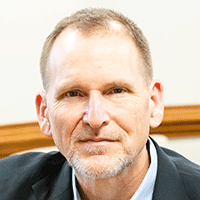
Robert Wagner
Associate Laboratory Director of the Energy Science and Technology Directorate(ESTD)
Oak Ridge National Laboratory (ORNL)
Plenary Title: Advancing the U.S. Energy System Through Heat Transfer and Thermal Management: Connecting Fundamental Science to Real World Energy Systems
Abstract: The United States energy system faces a defining challenge of rapidly growing demand coupled with increasing system complexity. Today, only approximately one-third of primary energy is converted into useful services such as light, space conditioning, manufacturing, and mobility, while the remaining two-thirds is largely rejected as waste heat. This rejected energy spans a wide range of applications and temperatures, and its recovery, staging, and reuse represent one of the largest underutilized opportunities in the national energy portfolio. While much of this heat is thermodynamically low quality and not fully recoverable for useful work, even modest improvements applied to such a large energy stream can have a significant impact on the overall system. Addressing increasing demand therefore requires not only expanding source energy supply but also fundamentally reducing losses. Heat transfer and thermal management are central to both objectives, enabling greater performance within existing systems while supporting the deployment of new energy infrastructure and emerging technologies. Across how we generate energy, how we move it, and how we use it, the ability to effectively manage heat increasingly determines overall system performance and usable output.
Advances in fundamental heat transfer science, including thermophysical properties, nanoscale transport, multiphase phenomena, and predictive computational methods, are essential to realizing these gains. However, capturing their full impact requires integrated, multidisciplinary approaches to thermal management that connect discovery to deployment and bridge scales from materials to complete energy systems.
Through examples from power generation, energy cascading, and end-use applications such as industrial processes and next-generation data centers, this presentation highlights how improved thermal management can directly reduce system-level losses and unlock additional usable energy. The presentation concludes with a forward-looking perspective as the heat transfer community is uniquely positioned to drive this effort to reduce energy losses, advance critical emerging technologies, and strengthen the affordability, reliability, and security of the U.S. energy system while reducing the need for proportional increases in new energy supply.
Biography: Robert Wagner is the Associate Laboratory Director of the Energy Science and Technology Directorate (ESTD) at Oak Ridge National Laboratory (ORNL). In this role, he leads more than 550 researchers and operations staff focused on developing and deploying advanced technology solutions in manufacturing, buildings, transportation, and electrical grid infrastructure.
He and his team steward four Department of Energy national user facilities including the Building Technologies Research and Integration Center (BTRIC), Carbon Fiber Technology Facility (CFTF), Manufacturing Demonstration Facility (MDF), and the National Transportation Research Center (NTRC). The directorate also stewards the Grid Research Integration and Deployment Center (GRID-C).
A first-generation college graduate, Robert came to ORNL as an undergraduate student in 1992 and advanced through multiple levels of leadership at the laboratory while building a distinguished career as globally recognized transportation and combustion researcher. He earned BS, MS, and Ph.D. degrees in mechanical engineering from the Missouri University of Science & Technology. He is a Fellow of the American Association for the Advancement of Science (AAAS), the Society of Automotive Engineers (SAE) International, and the American Society of Mechanical Engineers (ASME) and was awarded the SAE International Medal of Honor and the ASME George Westinghouse Gold Medal. Robert also graduated from the DOE Oppenheimer Science and Energy Leadership Program and will serve as the chair of the Oppenheimer Leadership Network in 2025.
He is a former Director of the NTRC and was a leader and founding member of the DOE initiative on the Co-Optimization of Fuels and Engines. The initiative brought together the expertise of nine national laboratories, more than 20 universities, and the DOE Vehicle Technologies Office and Bioenergy Technologies Office.