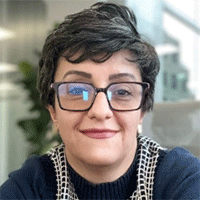
Parastoo Dehkordi
HeartForce Medical Inc.
Presenting in Track 7: Biomedical & Biotechnology Engineering
Tuesday, November 10th, 8:00am - 8:45am
Presentation Title: Seismocardiography as a Mechanical Biomarker for Coronary Artery Disease Risk Stratification
Abstract: Seismocardiography (SCG) measures low-amplitude chest-wall vibrations generated by cardiac mechanical activity. These vibrations reflect ventricular contraction, valve motion, blood acceleration, myocardial motion, and the transmission of cardiac forces through the thorax. Because coronary artery disease can affect myocardial contraction, relaxation, and electromechanical coupling, SCG may capture mechanical signatures associated with altered cardiac performance.
This work presents a wearable SCG-based approach for non-invasive estimation of coronary artery disease likelihood. Tri-axial SCG signals are recorded from the chest wall and processed to assess signal quality, segment cardiac cycles, and extract cycle-level mechanical features. Time-domain and time-frequency analyses are used to capture changes in the shape, timing, and spectral behavior of cardiac-induced chest-wall motion.
The extracted SCG features are integrated with clinical variables using machine-learning models to generate an electro-mechanical risk score. This approach treats SCG not simply as a vibration signal, but as a measurable representation of cardiac mechanical function. By linking chest-wall vibration analysis, cardiac biomechanics, wearable sensing, and AI-based modeling, this work highlights the potential of SCG as a mechanical biomarker platform for cardiovascular risk stratification.
Biography: Dr. Parastoo Dehkordi is Vice President of Research and Development at HeartForce Medical Inc., where she leads the development and validation of AI-based technologies for non-invasive risk assessment of coronary artery disease. She holds a Ph.D. in Biomedical Engineering from the University of British Columbia and has extensive experience in biomedical signal processing, seismocardiography, machine learning, and clinical validation of cardiovascular technologies. Her current work focuses on CardioClin™, a wearable SCG-based system that estimates the likelihood of coronary artery disease using cardiac mechanical activity and clinical risk factors.